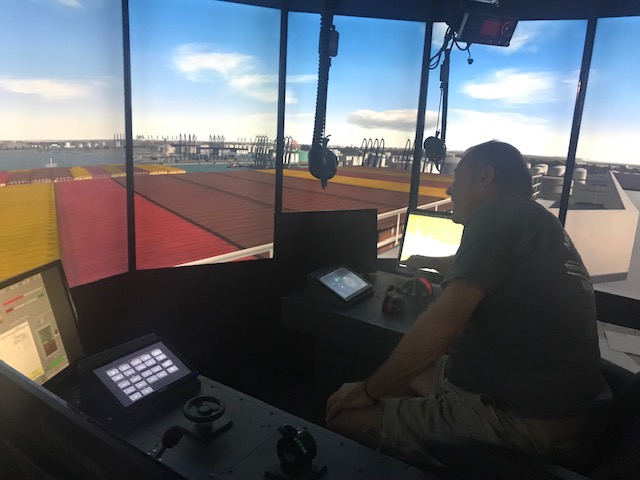
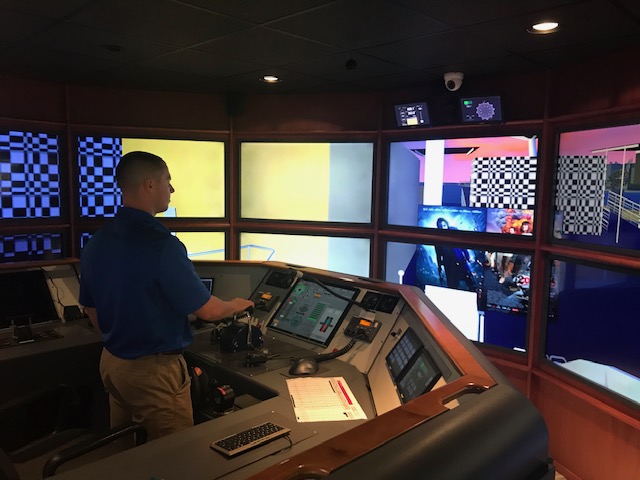
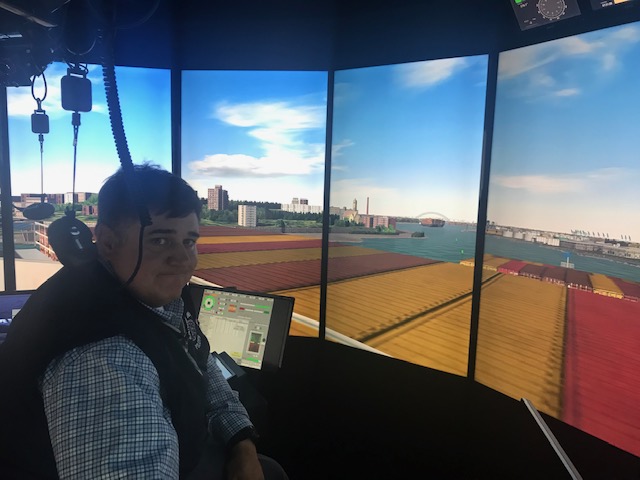
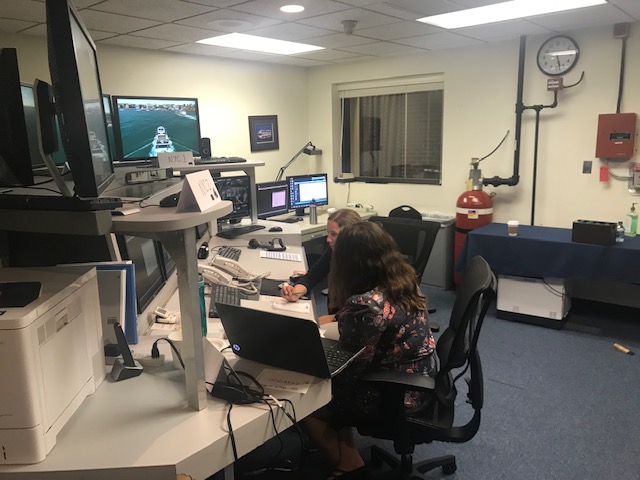
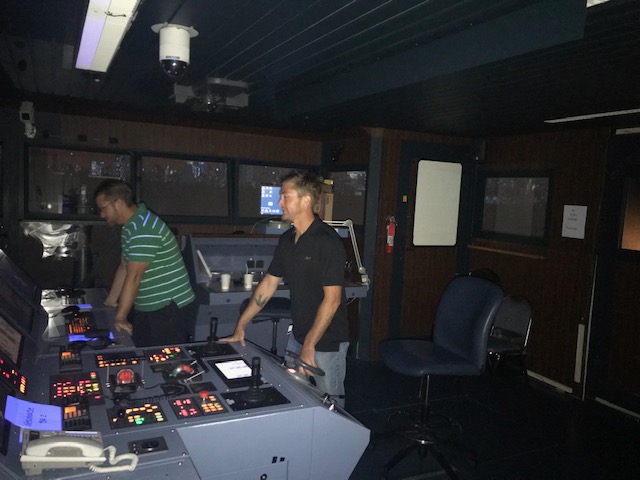
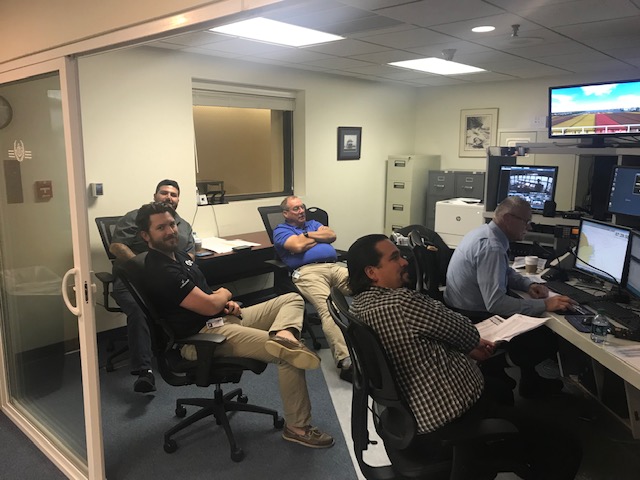
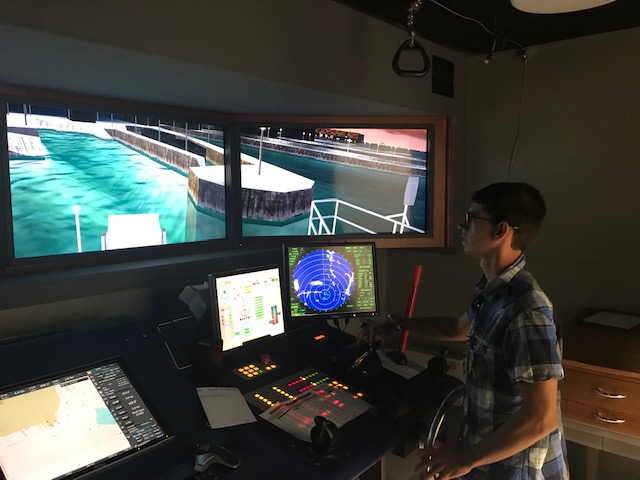
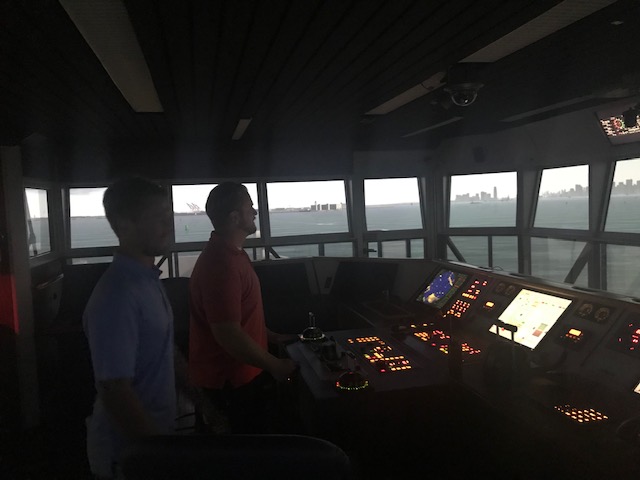
Last month, MITAGS worked with the Staten Island Ferries and the NYC Ferry to conduct simulation research to assess safety concerns from the maritime community regarding additional ferry service by NYC Ferry at the St. George terminal. The assessment included the following:
- Separate simulations incorporating two different landing spots. One directly under the Staten Island Ferry administration building at Slip 7, and the other approximately 300’ north of the SIF Fuel Facility;
- Utilized the current Staten Island Ferry rush hour schedule in the morning and in the afternoon;
- Utilized the proposed NYC Ferry rush hour schedule;
- Provided simulation of approaches and departures from Robbins Reef Light – slightly above the KV Buoy;
- Incorporated the radio chatter with the Ferry Terminal Supervisor and the Vessel Traffic System;
- Incorporated the normal harbor traffic on Conhook Range based on estimates from VTS;
- Incorporated speeds as obtained from AIS.
Using six of our simulators in tandem, MITAGS was able to replicate the proposed schedules of both ferry lines and the above requirements, providing all parties with the research needed to assist with making an informed decision and action plan. Representatives from the Staten Island Ferry, NYC Ferry, the Sandy Hook Pilot Association, Metro Pilots and the U.S. Coast Guard were present.
Related Posts
Duwamish Valley Youth Corps Visits MITAGS West
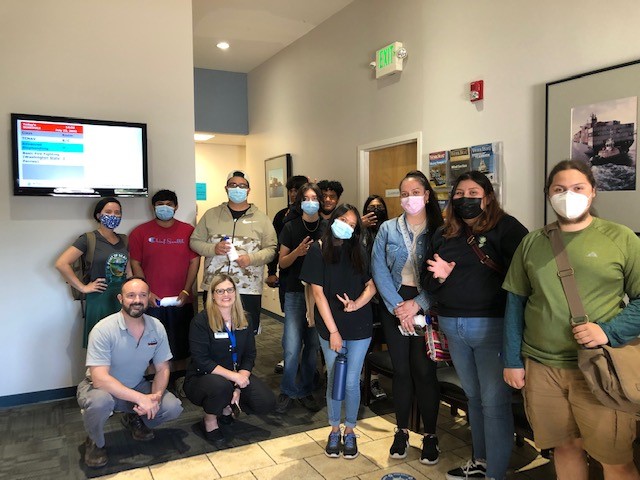
On July 22, MITAGS West had the privilege to host the Duwamish Valley Youth Corps of the Duwamish River Community Coalition at the campus for a tour and discussion. Also known as the Duwamish River Cleanup Coalition, the DRCC works to keep the Duwamish River clean and free of pollution for the benefit of […]
Onshore vs. Offshore Wind
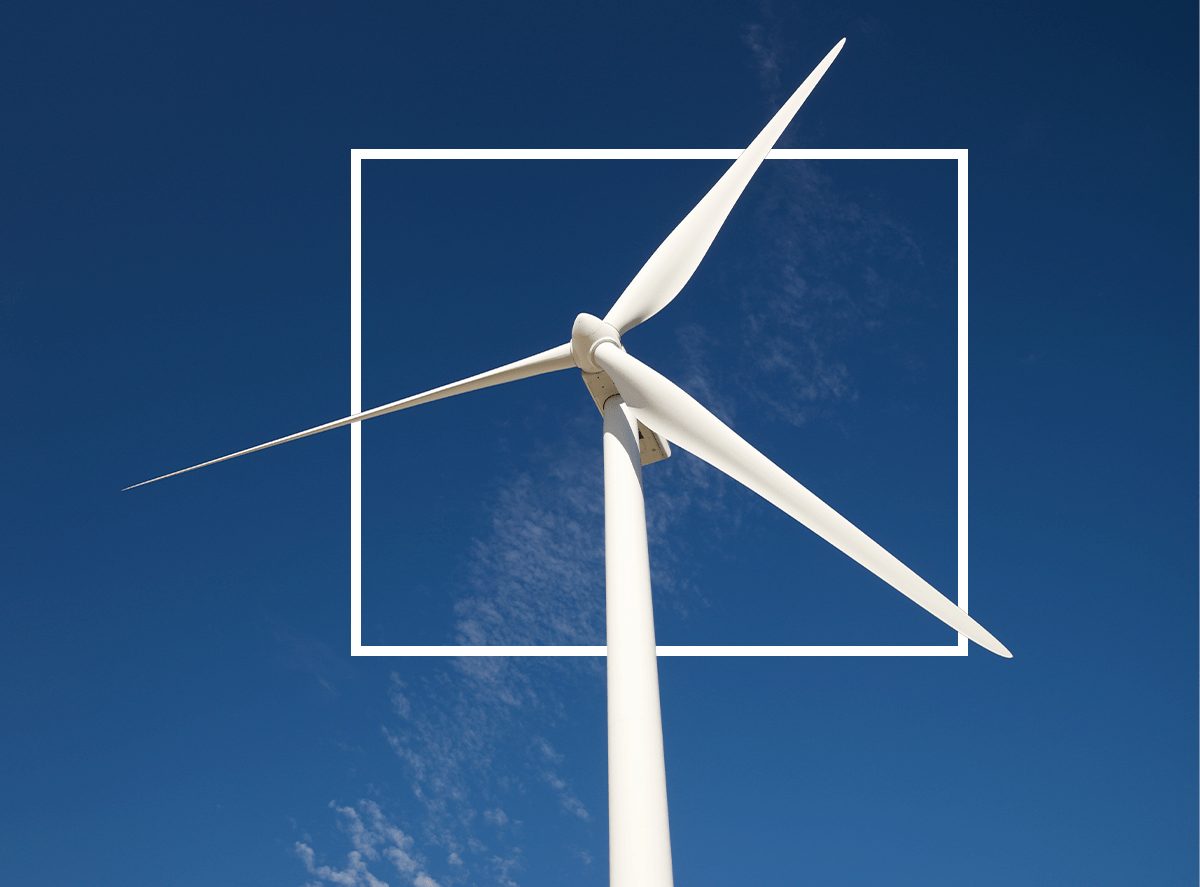
Since ancient times, wind has been a reliable energy source. Though it is not a new source of energy, the demand for wind power has risen over the last few decades. As an abundant and inexhaustible resource, wind provides a form of sustainable, clean energy. Additionally, generating wind power can lead to community benefits like […]
Mariners for America Conference 2026 Advances the White House Maritime Action Plan
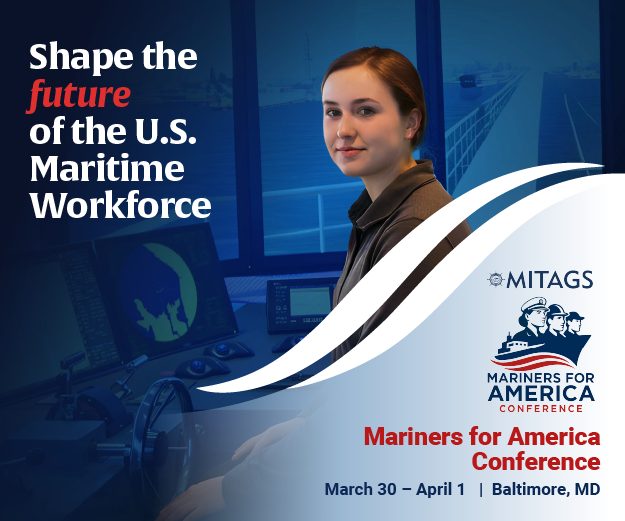
On February 13, 2026, the White House released the Maritime Action Plan, outlining a national strategy focused on sealift readiness, maritime workforce development, industrial base resilience, and stronger public-private collaboration. The Mariners for America Conference 2026 directly supports these priorities. As a leading maritime industry conference, the event brings together government agencies, maritime operators, labor […]