
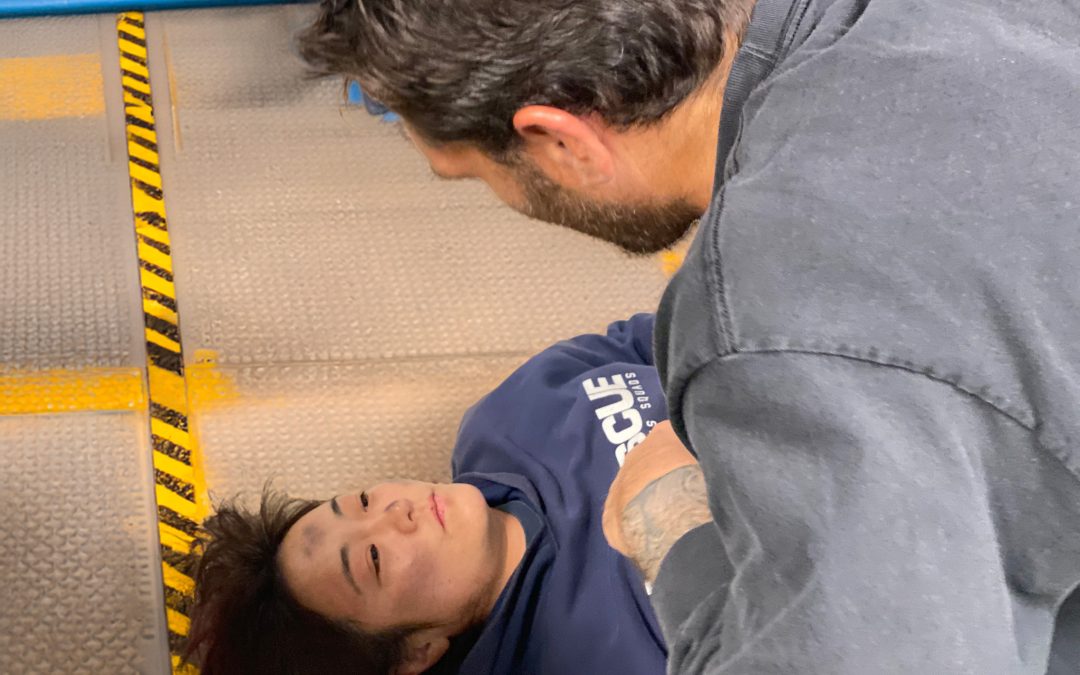
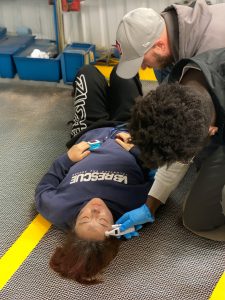
Larry & James take vitals
Over the past two weeks, licensed deck officers and MED-PIC students at our Seattle campus have been mastering emergency medical response in the Medical Person in Charge (MED-PIC) course (MITAGS-307). This STCW-compliant training prepares mariners to handle medical emergencies at sea.
Featured Scenario: Students responded to an electrocution-related CPR drill, where Charlie, playing a Chief Engineer, suffered an electric shock, went into cardiac arrest, and required CPR and AED intervention. After regaining a pulse but not breathing, rescue breaths were given. A secondary exam revealed an electrical exit wound, prompting cervical immobilization, backboarding, and transport to sick bay for further monitoring. Contact with a shore-side doctor led to a decision for medical evacuation.
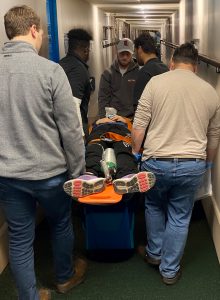
Tristan, Larry, James, Travis & Jack transport the patient
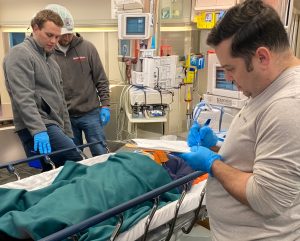
Ongoing assessment in sick bay
Great job to all the MED-PIC students for their dedication and teamwork!
Related Posts

Onshore vs. Offshore Wind
Since ancient times, wind has been a reliable energy source. Though it is not a new source of energy, the demand for wind power has risen over the last few decades. As an abundant and inexhaustible resource, wind provides a form of sustainable, clean energy. Additionally, generating wind power can lead to community benefits like […]

Catherine Gianelloni Talks MITAGS Training and Career Paths with Marine News
Featured in the February 2024 edition of Marine News, MITAGS East Coast Academic Director, Catherine Gianelloni discussed career pathways, transitions in the maritime industry, and pushing the boundaries of operational research and ship simulation. In January of this year, Gianelloni took over as Academic Director at the MITAGS East Coast campus in Linthicum Heights, MD. […]
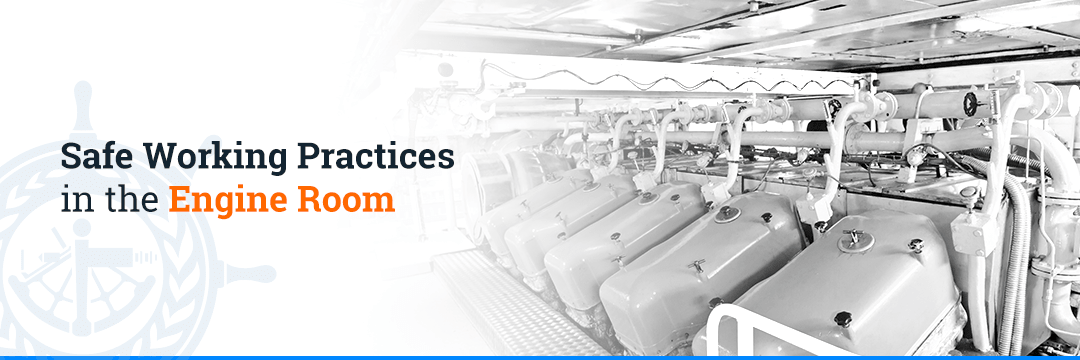
Safe Working Practices in the Engine Room
Ship engine room safety is paramount. As the power center of your vessel, dysfunctional engine rooms can produce mechanical errors, downed machinery, discord and — most pressingly — extreme safety hazards for your crew. Given a cargo ship engine room’s unique environment, it requires equally unique safety practices compared to other areas of your vessel. These […]